


500k Token Context
Analyze entire libraries of documentation with 500k context. This ai Claude Opus 4.1 thinking feature ensures near-perfect recall for complex technical audits and legal discovery.

file
text
File Analysis
curl --request POST "https://gptproto.com/v1/messages" \
  --header "Authorization: Bearer $GPTPROTO_API_KEY" \
  --header "Content-Type: application/json" \
  --header "anthropic-version: 2023-06-01" \
  --data '{
    "model": "claude-opus-4-1-20250805-thinking",
    "max_tokens": 1024,
    "messages": [
      {
        "role": "user",
        "content": [
          {
            "type": "text",
            "text": "Please analyze this PDF document and provide a summary of its content"
          },
          {
            "type": "document",
            "source": {
              "type": "url",
              "url": "https://tos.gptproto.com/resource/gptproto.pdf"
            }
          }
        ]
      }
    ]
}'Advanced ai Claude Opus 4.1 thinking features designed for professional developers requiring zero-defect logical consistency and massive data processing capabilities.
Analyze entire libraries of documentation with 500k context. This ai Claude Opus 4.1 thinking feature ensures near-perfect recall for complex technical audits and legal discovery.
Process video and images natively. The ai Claude Opus 4.1 thinking engine can explain visual failures or chart trends with temporal awareness and technical depth.

Built for autonomous agents, this ai Claude Opus 4.1 thinking model shows a 30% improvement in tool-call accuracy, serving as a reliable central controller for complex workflows.

The model utilizes an internal reasoning budget to deliberate before responding. This reduces logical errors in multi-step problems, making it a premier ai Claude Opus 4.1 thinking solution.

Getting a claude-opus-4-1-20250805-thinking API key takes four steps and a few minutes. Create a free GPTProto account, add credits, generate your key, and make your first call — at $12 / $60 it's a cheaper claude-opus-4-1-20250805-thinking API key than going direct, and one key works across every model on the platform. Full claude-opus-4-1-20250805-thinking Documentation is in the docs.

Sign up
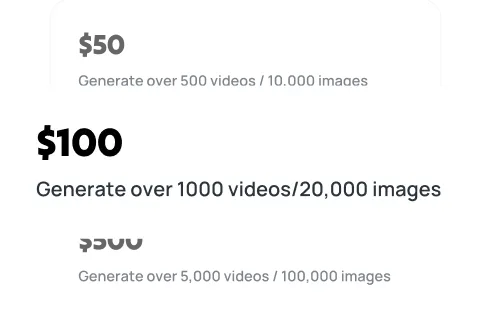
Top up
Generate your API key
Make your first API call
Find expert answers regarding the ai Claude Opus 4.1 thinking model, pricing, and specialized reasoning capabilities for advanced enterprise integration on the GPTProto.com platform.

Claude Capybara is set to redefine coding and cybersecurity with aggressive new benchmarks. Explore the future of Anthropic's next model series now.

Explore how Claude Sonnet 4.5 outperforms competitors in coding, context, and academic honesty. Optimize your workflow today. Discover more.

Discover how Claude Code is reshaping GitHub commits and the software landscape. Explore the shift toward agentic computing, token efficiency, and why Anthropic is leading the race against tech giants like Microsoft.

Discover why Claude is becoming the preferred tool for creative writing and complex coding through the Claude API. Learn how to optimize your workflow.