The AI video generation landscape just got more competitive. Google's Veo 3.1 has quietly rolled out across third-party platforms like Higgsfield, Imagine Art, and Envato, bringing significant upgrades that directly challenge OpenAI's Sora 2. While not yet available in Google Gemini, creators can already access this powerful model through partner platforms, generating professional-quality videos up to 60 seconds long at native 1080p resolution.
Key Points:
- Veo 3.1 now available on Higgsfield, Imagine Art, Envato, and coming soon to Xole AI
- Generates videos up to 60 seconds (previously limited to 8 seconds)
- Native 1080p output eliminates need for upscaling
- Enhanced character consistency across multi-shot sequences
- Cinematic presets for professional camera movements and lighting
- Multi-prompting enables complex storytelling in single generations
What is Veo 3.1?
Veo 3.1 represents Google DeepMind's latest iteration in AI video generation, serving as an incremental but powerful upgrade to Veo 3. Unlike the more revolutionary Veo 4 expected later this year, version 3.1 focuses on refining practical capabilities that creators need most: longer video duration, better consistency, and professional-grade output quality.
Google developed Veo as part of its generative AI family to transform text prompts and images into high-quality video content with native audio generation. The model creates synchronized soundscapes, sound effects, and music that align perfectly with visual scenes. While Veo 3 impressed users with realistic physics simulation and visual fidelity, version 3.1 addresses critical limitations in duration, resolution, and character consistency.
Core Veo 3.1 Specifications:
- Developer: Google DeepMind
- Model Type: Text-to-video and image-to-video AI generator with native audio
- Platform Access: Higgsfield, Imagine Art, Envato (Gemini API and Vertex AI coming soon)
- Resolution: Native 1080p output
- Duration: 30-60 seconds per generation
- Key Innovation: Multi-shot generation with consistent characters across scenes
Release Timeline: What We Know
According to social media reports and platform announcements, Veo 3.1 began rolling out to third-party platforms around October 10-11, 2025. The model appeared on services like Higgsfield and Imagine Art before any official Google announcement, following a pattern similar to Veo 3's initial release.
The strategic timing makes sense. After OpenAI released Sora 2 and Grok unveiled Imagine v0.9, the AI video generation market entered an intense competition phase. Google likely accelerated Veo 3.1's deployment to maintain momentum while developing the more ambitious Veo 4 architecture.
While Google hasn't issued formal press releases, the model's availability through partner platforms signals Google's confidence in the technology. Integration with Google Gemini and broader Vertex AI access is anticipated in the coming weeks.
Revolutionary Features and Improvements
Veo 3.1's most celebrated improvement addresses the character consistency problem that plagued earlier AI video generators. Previous versions often produced jarring variations in facial features, clothing, or body proportions across different shots. Version 3.1 maintains character integrity throughout multi-shot sequences with remarkable stability.
According to AI filmmaker Volodymyr Cherner, "Your generated hero won't change eye color or the number of fingers from scene to scene." This consistency extends beyond human characters to illustrations, cartoon characters, and even abstract visual elements.
Two Methods for Maintaining Character Consistency:
- Reference Image Method (Recommended)
- Create character designs using specialized image generators
- Upload these "reference photos" to guide Veo 3.1
- Model uses visual anchors for consistent appearance
- Works with photos, illustrations, and cartoon styles
- Detailed Description Method (Alternative)
- Provide comprehensive character profiles in text prompts
- Include age, occupation, facial features, clothing details
- Maintain identical descriptions across all scene prompts
- Combine with tools like Whisk AI for character creation
The reference image approach delivers superior results, especially for complex characters or specific visual styles. Advanced users often combine both methods, using reference images as the primary anchor while refining details through descriptive prompts.
Extended Duration: From 8 Seconds to 60 Seconds
Veo 3's eight-second limitation frustrated creators attempting narrative storytelling or detailed demonstrations. Veo 3.1 shatters this barrier, supporting 30 to 60-second generations depending on complexity and platform settings.
This extended duration transforms practical applications:
- Social Media Content: Full TikTok or Instagram Reel videos in one generation
- Product Demonstrations: Complete feature walkthroughs without stitching clips
- Narrative Storytelling: Complete story arcs with beginning, middle, and end
- Educational Content: Comprehensive explanations with multiple examples
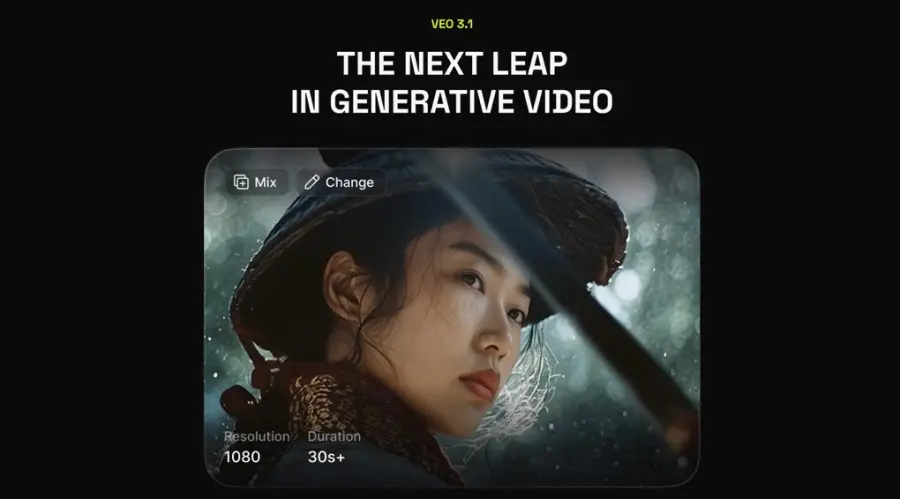
The Higgsfield website confirms "30 seconds+" video generation, while multiple sources including filmmaker testimonials suggest the full 60-second capability is available for simpler scenes. This flexibility lets creators balance duration with visual complexity based on project needs.
Native 1080p Resolution: Professional Quality Output
Unlike predecessors requiring post-generation upscaling, Veo 3.1 generates at native 1080p resolution (1920x1080 pixels). This eliminates the quality degradation typically associated with AI upscaling algorithms and streamlines production workflows significantly.
Professional Benefits:
- No additional upscaling tools required
- Cleaner, sharper detail throughout the frame
- Better text readability in generated videos
- Suitable for broadcast and professional applications
- Faster turnaround from generation to publication
For marketers creating commercial content, filmmakers producing B-roll footage, or social media creators developing platform-specific videos, native high-resolution output represents a major time and quality advantage.
Cinematic Presets: Professional Control Made Simple
Veo 3.1 introduces cinematic presets that democratize professional cinematography. Instead of crafting complex prompts describing camera movements, lighting setups, and atmospheric conditions, creators select from preset options that handle the technical execution automatically.
Available Cinematic Controls:
- Camera Movements: Drone shots, aerial perspectives, tracking shots
- Pan Speeds: Slow pans for emotional moments, fast pans for action
- Zoom Effects: Smooth zoom in/out with professional easing
- Shot Types: Wide establishing shots, close-ups, over-the-shoulder angles
- Lighting Presets: Golden hour, harsh sunlight, soft studio lighting, moody low-key
- Atmospheric Effects: Fog, rain, dust particles, lens flares
As Higgsfield explains, these presets ensure "camera angles shift with the precision of a real production studio." This feature levels the playing field, allowing creators without cinematography backgrounds to achieve Hollywood-quality visual effects through simple selections.
Multi-Shot Storytelling with Multi-Prompting
Perhaps Veo 3.1's most ambitious feature is multi-shot generation through multi-prompting. Creators can now describe a sequence of scenes, and the model produces a cohesive video with natural transitions, varying perspectives, and consistent characters throughout.
How Multi-Prompting Works:
- Generate your initial scene with a text or image prompt
- Click "add to scene" or "extend"
- Describe the next action or camera angle
- Veo 3.1 seamlessly connects new content with existing footage
- Repeat for multiple shots within the 60-second limit
This approach mirrors professional video production workflows. Rather than generating isolated clips and manually assembling them in video editing software, creators direct entire sequences through conversational prompts. The underlying Veo 3 architecture ensures visual consistency, while new AI capabilities handle transition timing and pacing.
According to Imagine Art's documentation, "Veo 3.1 ensures characters stay consistent across every frame, environments transition naturally" during multi-shot sequences. This reliability makes complex narrative projects feasible without extensive technical expertise.
Enhanced Audio Synchronization
Building on Veo 3's native audio generation, version 3.1 improves sound effect layering, dialogue synchronization, and music alignment based on prompt descriptions. The model understands contextual audio relationships, generating soundscapes that support rather than compete with visual elements.
Audio Improvements:
- Precise timing alignment between visual actions and sound effects
- Intelligent audio layering (dialogue remains clear over background music)
- Ambient sound generation matching scene environment
- Natural audio transitions between shots
- Lip-sync accuracy for speaking characters
This synchronization reduces post-production audio work significantly. Creators can focus on visual storytelling while trusting the model to generate appropriate, well-timed audio that enhances the viewing experience.
Try Veo 3.1 AI Video Generator on Xole AI
Want to experience Veo 3.1's powerful features without juggling multiple platform subscriptions? Access The Veo 3.1 Video Generator on Xole AI. This platform unifies Google's latest model with other leading AI video tools, creating your all-in-one solution for professional video creation.
Xole AI eliminates subscription fatigue by consolidating multiple AI video generators into a single interface. Whether you're experimenting with different models for a specific project or comparing results across platforms, Xole AI streamlines your creative workflow while reducing costs.
Why Choose Xole AI for Veo 3.1 Video Generation:
- Multiple Premium Models: Access Veo 3.1, Veo 3, Kling, Seedance, Wan, and Higgsfield without separate subscriptions
- Flexible Input Options: Support for both text-to-video and image-to-video workflows
- Immediate Model Updates: New AI video generators added as soon as they become available
- Cost-Effective Solution: One subscription replaces multiple platform fees
- Side-by-Side Comparison: Test different models on the same prompt to find the best fit
- Unified Interface: Consistent user experience across all AI video models
- No Platform Switching: Complete projects from start to finish in one place
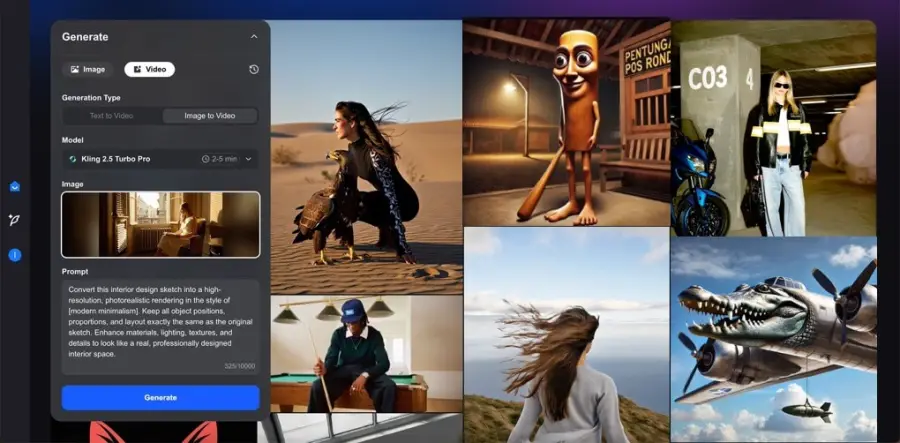
With Xole AI's text-to-video capability, start from scratch with creative prompts describing your vision. The image-to-video option transforms existing images, illustrations, or design mockups into dynamic video content. This flexibility accommodates different creative processes and project requirements, from initial concept exploration to final production.
For creators tired of managing separate accounts across Gemini, Open AI, Kling, and other platforms, Xole AI offers a practical solution. Compare Veo 3.1's character consistency against Kling's motion quality, or test different models' handling of complex scenes—all within minutes and without leaving the platform.
How to Create Videos with Veo 3.1 on Xole AI
Step 1: Get Started
Sign up or log in to your Xole AI account. From the dashboard, open the AI Video Generator and select Google Veo 3.1 from the model menu.
Step 2: Set Up Your Input
Choose Text-to-Video or Image-to-Video as your starting point.
-
For text: Describe your scene with details like characters, actions, and camera style.
-
For image: Upload a reference image and specify the motion or atmosphere you want.
Step 3: Customize & Generate
Apply cinematic presets (lighting, camera angles, effects), set duration and resolution (up to 60s, 1080p), then click Generate.
Use multi-prompting to extend or add scenes, and download your final video once ready.
Pro Tips for Best Results:
- Use reference images for consistent character appearance across multiple generations
- Start with shorter durations (15-30 seconds) to test prompts before committing to 60-second generations
- Leverage cinematic presets instead of describing camera movements in text prompts
- Be specific about character details, clothing, and environmental context
- Experiment with different models on Xole AI to find the best fit for each scene
Practical Applications Across Industries
Veo 3.1's enhanced capabilities expand real-world use cases significantly across various sectors:
Social Media and Content Creation
YouTube creators, Instagram influencers, and TikTok producers can now generate complete videos that meet platform requirements without extensive editing. The 60-second duration perfectly matches Instagram Reels and TikTok limits, while native 1080p resolution ensures professional presentation across all platforms.
Key Benefits:
- Complete Reels or TikToks in single generations
- Consistent character appearance across content series
- Professional cinematography without expensive equipment
- Rapid content iteration for trending topics
Marketing and Advertising
Campaign managers benefit from Veo 3.1's preset system when creating advertisement variations for A/B testing. Generate multiple versions of product demonstrations with different cinematography styles, test audience responses, and refine messaging—all within hours rather than weeks.
Key Benefits:
- Rapid campaign variation testing
- Cost-effective product demonstration videos
- Consistent brand character representation
- Professional polish without video production teams
Education and Training
Educational content creators gain powerful tools for explaining complex concepts through dynamic visuals paired with synchronized audio. The multi-shot capability supports structured lesson formats where different scenes illustrate various aspects of a topic while maintaining visual consistency throughout.
Key Benefits:
- Complex concept visualization
- Multi-scene lesson structures
- Consistent educational characters
- Engaging visual demonstrations
Corporate Communications
Training videos, sales pitches, internal announcements, and onboarding materials now require minimal video production expertise. Corporate teams can create professional internal communications that maintain brand consistency across all materials.
Key Benefits:
- Scalable training video production
- Consistent corporate branding
- Professional presentation without specialists
- Rapid communication deployment
Veo 3.1 vs Competitors: How It Stacks Up
The AI video generation landscape reached peak competition in late 2025 with major releases from Google, OpenAI, and xAI. Understanding how Veo 3.1 compares helps creators choose the right tool for specific projects.
|
Feature
|
Google Veo 3.1
|
OpenAI Sora 2
|
Grok Imagine v0.9
|
|
Maximum Duration
|
30-60 seconds
|
20 seconds
|
Variable
|
|
Resolution
|
Native 1080p
|
Up to 1080p
|
High quality
|
|
Primary Strength
|
Extended duration & multi-shot
|
Photorealism & Cameo feature
|
Speed & flexibility
|
|
Audio Generation
|
Native sync with effects
|
Native with dialogue sync
|
Limited
|
|
Character Consistency
|
Enhanced cross-scene
|
Good within single clips
|
Moderate
|
|
Multi-Prompting
|
Yes (multi-shot sequences)
|
Limited
|
No
|
|
Cinematic Presets
|
Yes
|
No
|
Limited
|
|
Platform Access
|
Third-party platforms, coming to Gemini
|
ChatGPT Pro, waitlist
|
Grok platform
|
|
Best For
|
Long-form content, storytelling
|
Short photorealistic clips
|
Quick iterations
|
Competitive Positioning
Veo 3.1's Strategic Advantages:
- Duration Leadership: 60-second maximum surpasses most competitors
- Workflow Efficiency: Multi-prompting reduces post-production editing
- Consistency Focus: Best-in-class character consistency across scenes
- Professional Tools: Cinematic presets democratize advanced techniques
Sora 2's Advantages:
- Photorealism: Industry-leading realistic textures and physics
- Cameo Feature: Integrate specific people into generated content
- ChatGPT Integration: Seamless workflow within ChatGPT interface
Grok Imagine v0.9's Advantages:
- Generation Speed: Faster outputs for rapid iteration
- Content Flexibility: Fewer content restrictions
- X Platform Integration: Direct sharing to social media
The competitive dynamics benefit creators. Each platform's strengths push others to improve, accelerating innovation across the entire AI video generation space. Rather than declaring a single "winner," creators should evaluate tools based on specific project needs—whether prioritizing maximum photorealism, extended duration, or generation speed.
For projects requiring extended storytelling with consistent characters, Veo 3.1 excels. Short, highly realistic clips benefit from Sora 2's photorealism engine. Rapid prototyping and iteration suit Grok Imagine's speed advantages.
FAQs about Veo 3.1 AI Video Generator
When does Veo 3.1 release?
Veo 3.1 began rolling out to third-party platforms around October 16, 2025. The model is currently available through Higgsfield, Imagine Art, and Envato, with additional platform integrations expected throughout October 2025. Integration with Google Gemini and broader Vertex AI access is anticipated in the coming weeks, though Google has not announced an official public release timeline for these platforms.
How does Veo 3.1 differ from Veo 3?
Veo 3.1 introduces several critical improvements over Veo 3: extended video duration (60 seconds vs 8 seconds), native 1080p output (eliminating upscaling needs), enhanced character consistency across multi-shot sequences, cinematic presets for professional camera control, and multi-prompting capabilities for complex storytelling. While Veo 3 established strong foundations in audio synchronization and physics simulation, version 3.1 focuses on practical improvements that address real creator workflow limitations.
Can I use Veo 3.1 for commercial projects?
Usage rights depend on the platform providing access to Veo 3.1. Third-party platforms like Higgsfield, Imagine Art, and Xole AI typically include commercial usage rights in their subscription tiers, though specific terms vary by platform. When Veo 3.1 becomes available through Google's official Vertex AI and Gemini platforms, commercial usage will likely follow Google's standard generative AI terms of service. Always review the specific platform's terms of service before using AI-generated videos in commercial applications, especially for high-stakes projects like advertisements or film production.
Conclusion
Google Veo 3.1 advances AI video by tackling practical production hurdles. Its extended duration, 1080p output, and character consistency make it a viable professional tool. Rather than a high-profile launch, Google is quietly deploying it via third-party platforms like Higgsfield for real-world testing before a wider Gemini integration.
This competition, including OpenAI's Sora, ultimately benefits creators. As models rapidly evolve, each offers distinct strengths, from duration to photorealism. This innovation democratizes professional video production, providing increasingly powerful tools and accelerating the entire field's development month by month.