TL;DR
Claude 4.5 (released September 2025) features Sonnet 4.5—the world's best coding model—and Haiku 4.5, both with extended thinking capabilities. Sonnet 4.5 achieves 77.2% on SWE-bench, operates autonomously for 30+ hours, and maintains pricing at $3/$15 per million tokens. Haiku 4.5 delivers near-frontier intelligence at $1/$5—one-third the cost with 2x the speed. Both support new features: memory tool, context editing, and hybrid reasoning modes.
Introduction
Anthropic released Claude Opus 4.5 in November 2025, completing its powerful model lineup. Developers now have three distinct options: frontier-level Opus for complex autonomous tasks, balanced Sonnet for most production applications, and ultra-efficient Haiku for high-volume workloads. The Claude API remains the fastest path to deploying enterprise-grade AI without managing infrastructure. With transparent token-based pricing, free setup, and no long-term commitments, thousands of developers are integrating Claude into customer support bots, coding assistants, content generation pipelines, and data analysis platforms.
This guide walks you through obtaining your API key, understanding your costs, selecting the right model, and making your first API call—in about 15 minutes.
What is Claude AI?
The Claude API is Anthropic's REST interface for accessing Claude models programmatically. You send text prompts to Claude's servers; Claude processes them and returns responses. You pay only for the tokens you use—roughly one token per four characters of text.
Unlike building your own AI system, using the Claude API means Anthropic handles all infrastructure, safety filtering, and model updates. Your focus shifts to prompt engineering and integration.
Claude stands out for three reasons. First, it's exceptionally safe by design. Anthropic trained Claude using Constitutional AI, a method that prioritizes harmlessness without sacrificing capability. This matters for enterprise deployments where reliability is non-negotiable. Second, Claude excels at reasoning. Its performance on coding tasks (77.2% on SWE-bench), math, and multi-step analysis consistently outpaces competitors. Third, transparent pricing with cost-saving options (50% discount for batch processing, up to 90% off with prompt caching) keeps expenditure predictable.

Constitutional AI Framework
Claude's foundation is built on Constitutional AI principles, which means it's trained to:
-
Follow ethical guidelines - Refuse harmful requests while remaining helpful
-
Provide balanced perspectives - Avoid bias and present multiple viewpoints
-
Maintain safety standards - Consistent behavior that meets enterprise requirements
-
Respect user values - Align with human preferences and societal norms
This approach makes Claude particularly suitable for business applications where safety and reliability are paramount.
Advanced Reasoning Capabilities
Claude 4.5 demonstrates exceptional performance in complex reasoning tasks:
-
Multi-step problem solving - Breaking down complex problems into manageable steps
-
Contextual understanding - Maintaining coherent conversations across 200K+ token contexts
-
Creative problem-solving - Generating innovative solutions and approaches
-
Extended thinking - Optional deep reasoning mode for complex challenges
Safety and Alignment
What sets Claude 4.5 apart is its commitment to safety:
-
Reduced harmful outputs - Lower rates of deception and sycophancy
-
Consistent behavior - Predictable responses that meet business standards
-
Transparent limitations - Clear communication about capabilities and constraints
-
Robust filtering - Built-in content moderation with improved prompt injection resistance
Multimodal Capabilities
Claude 4.5's versatility extends beyond text:
-
Image analysis - Understanding and describing visual content
-
Document processing - Extracting information from PDFs and images
-
Code generation - State-of-the-art coding across multiple languages
-
Computer use - Autonomous interaction with desktop and browser environments
-
Code execution - Built-in Python and Node.js sandboxed execution
Conversational Excellence
Claude 4.5 excels at natural, efficient interactions:
-
Context awareness - Tracks token usage and manages context intelligently
-
Concise communication - Direct, natural tone with less verbosity
-
Adaptive responses - Adjusting style based on task complexity
-
Multilingual support - Effective communication across different languages
-
Professional reliability - Consistent quality suitable for customer-facing applications
How to Get Claude 4.5 API Key?
Step 1: Create Your Anthropic Account
Go to https://console.anthropic.com. Click "Sign Up" and enter your email. Verify your email through the confirmation link. Unlike a regular Claude.ai account, a developer account lets you access the API and manage billing.
Step 2: Set Up Billing
In your console, navigate to Billing. New users receive $5 in free credits automatically—enough to test the API extensively. Link a payment method to continue beyond free credits. You'll only be charged for actual usage.
Step 3: Generate Your API Key
Go to API Keys in your console. Click "Create Key." Give it a descriptive name (e.g., "My App" or "Chatbot Backend"). Copy the key immediately and store it securely. You won't see it again.
Never hardcode your API key directly in your application code. Instead, store it as an environment variable:
bash
export ANTHROPIC_API_KEY='sk-ant-...'
Step 4: Test Your Connection
Run this curl request to confirm everything works:
bash
curl https://api.anthropic.com/v1/messages \
  -H "Content-Type: application/json" \
  -H "x-api-key: $ANTHROPIC_API_KEY" \
  -H "anthropic-version: 2023-06-01" \
  -d '{
    "model": "claude-sonnet-4-5-20250929",
    "max_tokens": 1000,
    "messages": [{"role": "user", "content": "Say hello!"}]
  }'
You should receive a response confirming your setup works.
Claude 4.5 API Pricing Guide
Claude charges for input tokens (what you send) and output tokens (what Claude returns) separately. Rates vary by model. You pay for every request, so understanding pricing is crucial for budgeting.
| Feature |
Claude Sonnet 4.5 |
Claude Haiku 4.5 |
Claude Opus 4.5 (Latest) |
Claude Sonnet 4 (Legacy) |
Claude Opus 4.1 (Legacy) |
| Description |
Best for Most Use Cases |
High-Performance Budget Option |
Flagship model with maximum reasoning & generation capability |
(Superseded by Sonnet 4.5) |
For specialized use cases requiring maximum capability |
| Input Price |
$3.00 / million tokens |
$1.00 / million tokens |
TBD |
$3.00 / million tokens |
$15.00 / million tokens |
| Output Price |
$15.00 / million tokens |
$5.00 / million tokens |
TBD |
$15.00 / million tokens |
$75.00 / million tokens |
| Context Window |
200,000 tokens (1M in beta) |
200,000 tokens |
200,000+ tokens |
200,000 tokens |
200,000 tokens |
| Speed |
– |
2x faster than Sonnet 4.5 |
Slower than Sonnet, optimized for depth |
– |
– |
| Best For |
Complex agents, production coding, multi-hour tasks |
High-volume apps, real-time interactions, cost-sensitive deployments |
Frontier reasoning, advanced agents, critical decision workflows |
(Superseded) |
(Specialized) |
| Ideal Scenarios |
Software development, content generation, customer service, data analysis |
Chat applications, simple queries, high-throughput processing, sub-agents |
Scientific research, advanced coding, long-horizon planning, premium AI products |
(Superseded) |
(Specialized) |
Saving Money on Claude API Costs
- Batch API (50% discount): Process multiple requests asynchronously. Perfect for non-urgent workloads like overnight report generation or data processing.
- Prompt Caching (up to 90% savings): Reuse large inputs (system prompts, documentation, code) across requests. Cached tokens cost 90% less.
- Token Reduction: Write concise prompts. Ask Claude for summaries. Use structured outputs instead of verbose explanations.
- Example: A system processing 10 million tokens daily using Sonnet 4.5 with batch processing and caching could reduce costs from $180/day to under $20/day.
Claude 4.5 Models Comparison
Claude Sonnet 4.5: The Developer's Choice
Key Advantages:
- State-of-the-art Coding: 77.2% on SWE-bench Verified, 82% with parallel compute
- Extended Autonomy: Operates independently for 30+ hours
- Computer Use Leadership: 61.4% on OSWorld (vs 42.2% for Sonnet 4)
- Hybrid Reasoning: Toggle between standard and extended thinking modes
- Context Awareness: Tracks token usage and manages context intelligently
Ideal Use Cases:
- Complex software development and debugging
- Multi-hour autonomous coding projects
- Production-ready application development
- Advanced agent workflows
- Security engineering and vulnerability detection
- System architecture and design
Benchmark Performance:
- SWE-bench Verified: 77.2% (standard), 82.0% (parallel)
- OSWorld: 61.4%
- AIME 2025: 100% (with Python tools)
- GPQA Diamond: 83.4%
- MMLU: 89.1%
Claude Haiku 4.5: Fast & Cost-Effective Intelligence
Key Advantages:
- Near-Frontier Performance: Matches Sonnet 4 capabilities
- Lightning Speed: 2x faster than Sonnet 4.5
- Cost Efficiency: One-third the cost of Sonnet 4.5
- Extended Thinking: First Haiku model with reasoning capabilities
- Full Tool Support: All Claude 4 tools including computer use
Ideal Use Cases:
- High-volume chat applications
- Real-time user interactions
- Cost-sensitive production deployments
- Sub-agent architectures in multi-agent systems
- Simple content generation and data extraction
- Computer use at scale
Key Features:
- Context awareness for better task persistence
- Thinking summarization for production-ready reasoning
- Parallel tool execution
- Enhanced computer use capabilities
Claude Opus 4.5: The Ultimate Reasoning Powerhouse
Key Advantages:
- Frontier-Level Reasoning: Designed for the most demanding analytical, mathematical, and logical tasks
- Maximum Model Intelligence: Anthropic’s most capable model for deep reasoning and problem solving
- Long-Form Thinking: Excels at extended, multi-step reasoning and complex decision chains
- Advanced Tool Use: Seamlessly integrates tools, code execution, and structured workflows
- Superior Context Handling: Maintains coherence and accuracy across very long contexts
Ideal Use Cases:
- Advanced scientific research and analysis
- Complex mathematical proofs and reasoning-heavy tasks
- Strategic planning and high-level decision support
- Autonomous agents requiring deep reasoning capabilities
- Legal, financial, and policy analysis
- Cutting-edge AI research and experimentation
Benchmark Performance:
- SWE-bench Verified: Industry-leading performance for complex code reasoning
- OSWorld: Top-tier results in real-world computer-use environments
- AIME 2025: Near-perfect performance with tool assistance
- GPQA Diamond: Exceptional accuracy on graduate-level questions
- MMLU: State-of-the-art multi-domain language understanding
How to Choose the Right Claude 4.5 Model
Choose Sonnet 4.5 When:
- Building complex agents or autonomous systems
- Coding production-ready applications
- Tasks require extended reasoning or multi-hour work
- Security and quality are paramount
- Budget allows for premium performance
Choose Haiku 4.5 When:
- High request volume with cost constraints
- Speed is critical for user experience
- Tasks are straightforward with clear requirements
- Building multi-agent systems needing fast sub-agents
- Free tier or budget-conscious implementations
Choose Opus 4.5 When:
- Building autonomous AI agents that think through complex problems
- Long-horizon coding tasks (refactoring large codebases, architecture design)
- Deep financial analysis or legal document review
- Task planning and coordination across multiple sub-agents
- You want maximum capability regardless of cost
New Features in Claude 4.5
Extended Thinking (Hybrid Reasoning)
Claude 4.5 models support extended thinking—an optional deep reasoning mode:
-
How it works: Model shows its thinking process before answering
-
When to use: Complex coding, math problems, multi-step reasoning
-
Control: Enable per-request with thinking parameter
-
Budget management: Set thinking_budget to control token usage
-
Output: Summarized thinking for safety and production use
Memory Tool (Beta)
Store and retrieve information outside the context window:
-
Persistent knowledge: Build knowledge bases over time
-
Session continuity: Maintain project state across conversations
-
Unlimited context: Store effectively unlimited information
-
Use cases: Long-running projects, customer profiles, project documentation
Enable with beta header: context-management-2025-06-27
Context Editing
Intelligent context management through automatic tool call clearing:
-
Automatic cleanup: Remove old tool calls to free context space
-
Maintains coherence: Preserves important conversation flow
-
Use cases: Extended conversations, multi-hour agent tasks
Enable with beta header: context-management-2025-06-27
Enhanced Computer Use
Claude 4.5 dramatically improves computer interaction:
-
61.4% OSWorld performance (up from 42.2% in Sonnet 4)
-
Browser automation: Navigate sites, fill forms, complete tasks
-
Desktop interaction: Control applications, manage files
-
Chrome extension: Available for Claude Max subscribers
Code Execution Tool
Built-in sandboxed code execution:
-
Languages: Python and Node.js
-
Capabilities: Run code, install packages, clone Git repos
-
Pricing: $0.05 per session-hour (minimum 5 minutes)
-
Use cases: Testing code, data analysis, prototyping
Web Search Integration
Native web search capability:
-
Pricing: $10 per 1,000 searches + standard token costs
-
Real-time information: Access current data and recent events
-
Research workflows: Enhanced information gathering
Claude API Capabilities
-
Text Generation: Human-like text across various formats—creative writing, technical documentation, conversational responses, and business content.
-
Vision Capabilities: Analyze images, extract information from visual content, understand diagrams and screenshots, process documents with embedded images.
-
Code Generation & Debugging: State-of-the-art coding performance, multi-language support, architectural design, security analysis, and refactoring.
-
Tool Use: Interact with external APIs, orchestrate complex workflows, parallel tool execution, and coordinated multi-tool operations.
-
Content Moderation: Built-in safety features, reduced harmful outputs, improved alignment, resistance to prompt injection attacks.
-
Classification & Analysis: Categorize data, sentiment analysis, extract structured information, domain-specific reasoning.
How to Get Claude Free API Access
New User Credits
-
Free credits: $5 automatically applied to new accounts
-
No credit card required: For initial signup and testing
-
Usage: Sufficient for prototyping and testing
-
Duration: Credits don't expire but are one-time only
Educational and Research Programs
-
Academic pricing: Special rates for educational institutions
-
Research grants: Additional credits for research organizations
-
Application: Contact Anthropic directly for eligibility
Alternative Ways to Access Claude AI for Free
-
Claude.ai Web Interface
-
Direct browser access to Claude 4.5
-
Free tier with usage limitations
-
Great for testing prompts and understanding capabilities
-
Includes code execution and file creation features
-
Third-Party Platforms
-
Poe by Quora: Provides access to Claude models
-
Various AI aggregators: May include Claude in free tiers
-
API platforms: Some offer free trials with Claude access
Maximizing Your Claude 4.5 Free Credits
Optimize Token Usage:
-
Use concise, specific prompts to minimize input tokens
-
Set appropriate max_tokens limits
-
Choose Haiku 4.5 for simple tasks (67% cheaper than Sonnet)
-
Enable prompt caching for repeated content (90% savings)
Development Best Practices:
-
Test with smaller requests during development
-
Use mock responses for UI development
-
Implement proper error handling
-
Monitor credit usage through the dashboard
Cost-Effective Strategies After Free Credits:
-
Use Batch API for non-urgent tasks (50% discount)
-
Implement response caching for common queries
-
Smart model selection based on task complexity
-
Context management with memory tool
Access Claude Through GPT Proto AI API Platforms
Direct API access through Anthropic's console works great. But many developers prefer GPT Proto—a unified platform that bundles Claude with GPT, Gemini, and other AI models in one API gateway.
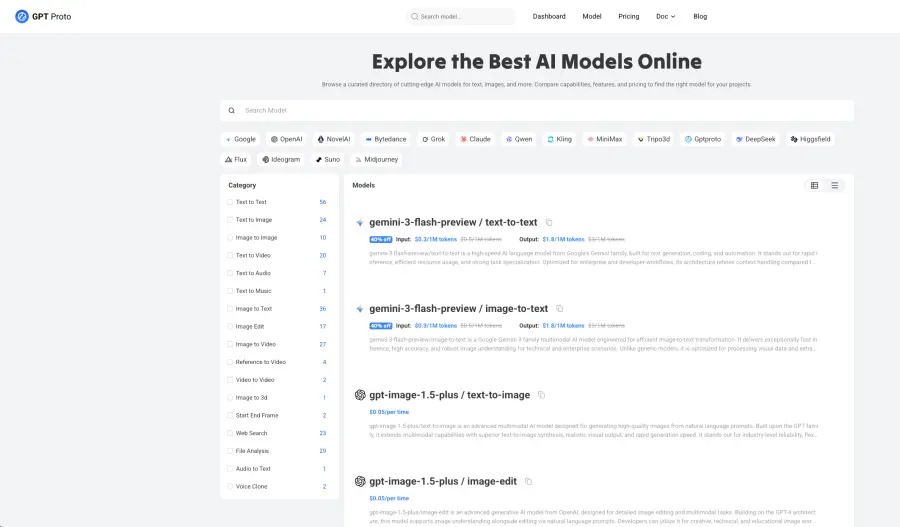
Why Choose GPT Proto?
- One API for Multiple Models: Manage Claude, GPT-4, Gemini, and more from a single endpoint. No juggling multiple API keys.
- Easy Model Switching: Test different models without rewriting code. Find the best fit for your use case.
- Global Speed: Distributed across regions for lower latency worldwide.
- Centralized Billing: One dashboard for all your AI services. Easier expense tracking for teams.
- Developer-Friendly: Clean documentation and simple integration.
When to Use GPT Proto vs. Direct Anthropic API
Use Direct Anthropic API when:
- You only need Claude
- Lowest latency is critical
- Cost optimization is paramount (no platform margins)
Use GPT Proto when:
- You want to test multiple AI models
- Team prefers unified key management
- Your app might use different models for different tasks
- You need centralized analytics and billing
Quick Integration with GPT Proto
The code is nearly identical to direct API access:
python
from anthropic import Anthropic

client = Anthropic(api_key="your-gpt-proto-key")

response = client.messages.create(
    model="claude-sonnet-4-5-20250929",
    max_tokens=1000,
    messages=[{"role": "user", "content": "Explain quantum computing"}]
)

print(response.content[0].text)
Switch endpoints, keep everything else the same. GPT Proto handles the rest transparently.
Conclusion
The Claude API removes barriers to AI adoption. Setup takes minutes. Pricing is transparent. Three models let you optimize for capability, speed, or cost. Whether you're building a customer service chatbot, a coding assistant, or an autonomous research tool, Claude provides reliable, safe AI without infrastructure overhead.
Thousands of developers and companies already use the Claude API—from solo builders to enterprises—because it simply works. The technology is proven. The pricing is fair. The only question is: what will you build?
Start today: Visit https://console.anthropic.com to create your free account or access GPT Proto AI API Platform. You'll have a working API key in less than two minutes.