TL;DR
Seedance 2.0 is ByteDance's powerful new AI video model that generates cinematic clips with native audio. Its launch triggered cease-and-desist letters from Disney and other Hollywood studios over copyright concerns. Developers can access earlier Seedance versions today via platforms like GPT Proto, with Seedance 2.0 API support coming soon.
A Viral Launch That Stirred Up Legal Drama
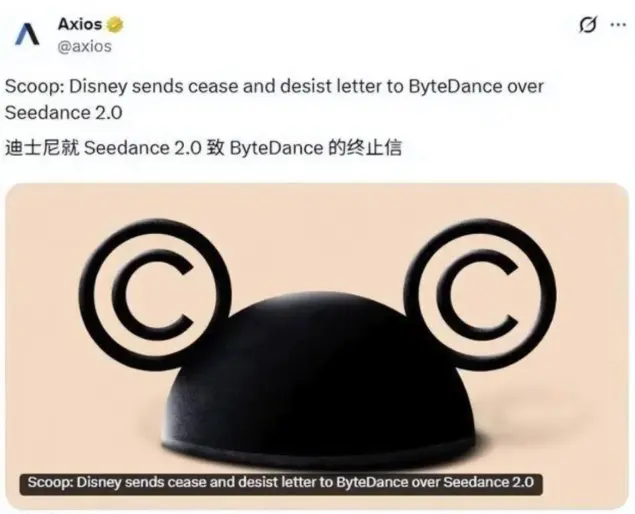
ByteDance launched Seedance 2.0 on February 12, 2026, and within days the internet was flooded with AI-generated videos — a fictional fight between Brad Pitt and Tom Cruise, Friends characters reimagined as otters, and alternate endings to popular TV shows. The quality was striking enough to go viral almost immediately. But not everyone was impressed. Disney sent ByteDance a cease-and-desist letter on February 13, accusing the company of loading Seedance with what it called a "pirated library" of copyrighted characters from Star Wars, Marvel, and other franchises. Paramount, Warner Bros., Netflix, and the Motion Picture Association followed with their own legal threats. ByteDance responded on February 16 by promising to add stronger safeguards, but the controversy is far from over.
What Is Seedance 2.0?
Seedance 2.0 is ByteDance's most advanced AI video generation model to date, released in February 2026 as part of the company's broader "Seed" ecosystem of foundation models.
Unlike earlier AI video tools that would generate visuals first and add audio separately — often causing awkward timing mismatches — Seedance 2.0 uses a unified multimodal architecture that generates video and audio at the same time. This means sounds like footsteps, dialogue, and background music are synced to the visuals from the moment of creation, not stitched in afterward.
Key Features of Seedance 2.0
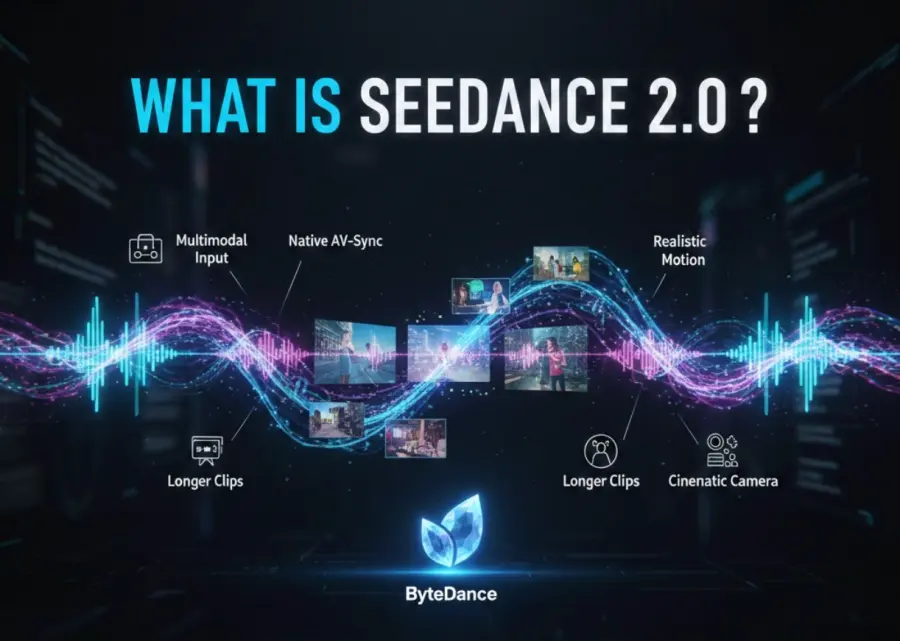
Seedance 2.0 packs several standout capabilities that set it apart from its predecessors and many competitors:
-
Multimodal inputs: The model accepts text prompts, reference images, audio clips, and existing video clips all at once — up to 12 reference files in a single generation.
-
Native audio-video sync: Audio and video are generated together, not layered on top of each other, resulting in natural sound timing.
-
Longer clips: While Seedance 1.0 maxed out at around 5 to 8 seconds, Seedance 2.0 can generate up to 15 to 20 seconds of video in a single pass.
-
Realistic motion: Internal benchmarks show a 90%+ usable rate on the first generation attempt — a major leap from the 20% average seen with older tools.
-
Cinematic camera control: The model understands camera language such as dolly zooms, tracking shots, and rack focuses, and executes them based on written descriptions.
-
High resolution: Output reaches up to 1080p and 2K resolution, depending on the platform.
Seedance 2.0 vs Disney — What the Dispute Is Really About
The Seedance 2.0 vs Disney conflict isn't just about a few viral videos. It cuts to the heart of a much bigger debate around how AI companies train their models.
Disney's legal letter, sent on February 13, 2026, accused ByteDance of treating its most valuable intellectual property — from Baby Yoda to Spider-Man to Darth Vader — as if it were "free public domain clip art." Disney argued that Seedance 2.0 had been pre-loaded with a pirated library of copyrighted content used to train and commercialize the model without any compensation or permission.
The timing was especially pointed because Disney had just struck a licensing deal with OpenAI in late 2025, making it the first major studio to formally partner with an AI video platform (Sora). That deal allows curated fan videos to be generated using Disney characters within a set framework. With ByteDance, there was no such agreement — and that distinction mattered.
Paramount, Warner Bros., Netflix, and the Motion Picture Association all sent their own cease-and-desist letters within days. SAG-AFTRA weighed in too, saying the model's unauthorized use of actors' voices and likenesses "undercuts the ability of human talent to earn a livelihood."
ByteDance responded publicly on February 16, saying it "respects intellectual property rights" and would strengthen its safeguards. The company also paused the ability for users to upload real human faces as reference material shortly after launch, following viral deepfake concerns. As of late February 2026, the dispute continues.
Seedance 2.0 vs Sora — How They Compare
Disney's willingness to partner with OpenAI but not ByteDance raises a natural comparison. Here's a quick look at where Seedance 2.0 and Sora 2 stand today:
| Feature | Seedance 2.0 | Sora (OpenAI) |
| Native audio generation | Yes | Limited |
| Max video length | ~15–20 seconds | Up to 20 seconds |
| Multimodal inputs | Text, image, audio, video | Text and image |
| IP licensing agreements | None (disputed) | Disney and others |
| Public availability | Restricted (China-based platforms) | Available via ChatGPT Pro |
| Developer API access | Coming soon | Available |
| Usable output rate | ~90% | High, but variable |
Sora has a head start in legitimacy with major studios. Seedance 2.0 has a technical edge in multimodal flexibility and audio-visual sync. The two models are targeting similar use cases — content creators, marketing teams, and developers building video pipelines — but the copyright situation puts them in very different positions right now.
How to Access the Seedance 2.0 API
If you're a developer who wants to build with Seedance models, direct access to Seedance 2.0 through ByteDance's official channels currently requires a Chinese Douyin account and faces significant server congestion. International users often report queue times exceeding two hours for a single generation on the free tier.
For developers outside China, third-party API platforms provide a more practical path.
Use Seedance 1.0 and Seedance 1.5 API Through GPT Proto Right Now
GPT Proto is a unified AI API platform based in the UK that aggregates top-tier models — including GPT, Claude, Gemini, Midjourney, and ByteDance's Seedance — under a single endpoint. Instead of managing multiple API keys across different providers, developers connect once and access everything from one dashboard.
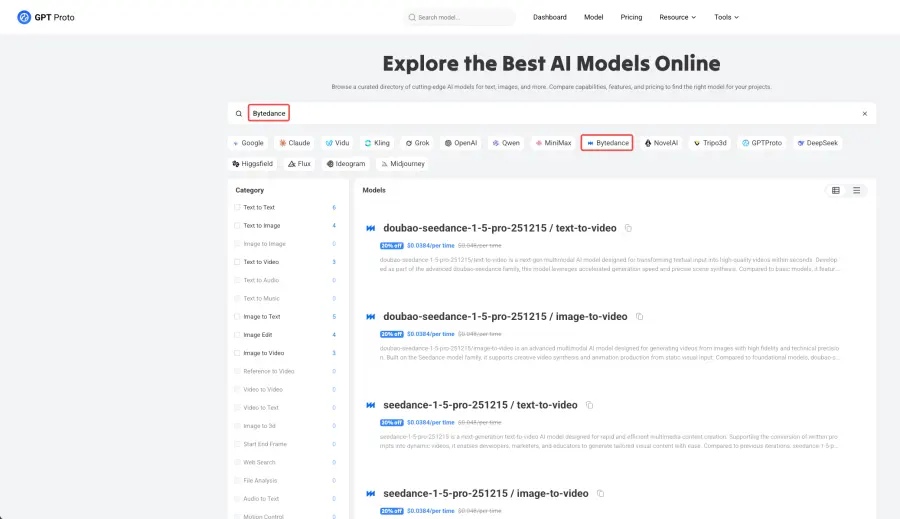
GPT Proto currently supports:
-
Seedance 1.0 Pro — ByteDance's original multi-tasking video generation model, excellent for multi-shot narratives and strong prompt-following
-
Seedance 1.5 Pro — An upgraded version with faster rendering, improved video quality, and more reliable scene interpretation for marketing, education, and creative workflows
Seedance 2.0 API support on GPT Proto is expected to follow once the model's access becomes more broadly available.
You can browse the full model catalog at gptproto.com/model to see all available options alongside pricing and documentation.
Why developers choose GPT Proto:
-
Single API key for all models — no juggling multiple provider accounts
-
Competitive pricing with transparent pay-as-you-go plans
-
99.9% uptime with enterprise-grade infrastructure
-
Access to video models including Sora, Veo, Kling, Wan, and Seedance in one place
-
No need for a Chinese phone number or payment method to use ByteDance models
For teams building content platforms, marketing automation tools, or creative applications, GPT Proto removes most of the friction that comes with accessing cutting-edge video AI directly.
FAQs About Seedance 2.0
Q1: Is Seedance 2.0 available outside China?
Not easily through official channels. As of February 2026, full access to Seedance 2.0 requires a Chinese Douyin account and is available through platforms like Jianying (CapCut's Chinese counterpart) and Xiaoyunque. International users can access earlier Seedance versions through platforms like GPT Proto, which provides the Seedance API without requiring a Chinese account. Direct Seedance 2.0 API access for international developers is not yet officially available.
Q2: What makes Seedance 2.0 different from previous versions?
The biggest upgrades are in motion quality, audio integration, and input flexibility. Seedance 2.0 generates audio and video simultaneously rather than separately, which eliminates the sync issues common in older models. It also accepts up to 12 reference files at once — images, audio clips, video snippets — and produces longer clips with a much higher usable success rate. Compared to Seedance 1.5, it handles complex multi-subject scenes and realistic physics far more reliably.
Q3: Why did Disney send a cease-and-desist to ByteDance over Seedance 2.0?
Disney alleges that ByteDance trained Seedance 2.0 on copyrighted Disney characters — including Baby Yoda, Spider-Man, and Darth Vader — without permission or compensation. The letter accused ByteDance of treating Disney's intellectual property as "free public domain clip art." This is particularly significant because Disney has an existing licensing deal with OpenAI's Sora, meaning the company is open to AI partnerships but expects proper agreements to be in place first.
Q4: When will Seedance 2.0 be available via API for developers?
ByteDance has not announced a specific public API launch date for Seedance 2.0 at the time of writing. Platforms like GPT Proto plan to add Seedance 2.0 support once it becomes available to API partners. In the meantime, Seedance 1.0 and 1.5 are already accessible through GPT Proto for developers who want to start building video generation pipelines today.
Conclusion: A Powerful Model Caught in a Bigger Battle
Seedance 2.0 is genuinely impressive technology. Its native audio-video sync, realistic motion, and flexible multimodal inputs put it at the front of the AI video generation field. But its launch also shows how quickly things can unravel when a powerful model goes live without adequate copyright safeguards. The Seedance 2.0 vs Disney dispute reflects a tension that the entire AI industry is still working through: how to build capable, creative tools without running roughshod over the people and companies whose work made training those tools possible.
For developers who want to build with Seedance technology today, GPT Proto offers a practical, well-supported path through its unified API — supporting Seedance 1.0 and Seedance 1.5 now, with Seedance 2.0 to follow. Visit gptproto.com to explore the full model library and get started.