


INPUT PRICE
Input / 1M tokens
text
OUTPUT PRICE
Output / 1M tokens
text


Claude Opus 4.7 API: High-Res Vision and Elite Coding Benchmarks
The release of Claude Opus 4.7 marks a significant shift in how we think about AI models—moving from simple prompt-response engines to autonomous agents. At GPTProto, we've integrated this latest powerhouse to ensure you can explore all available AI models and deploy the most capable reasoning tech available. Claude Opus 4.7 isn't just a minor patch; it's a complete refinement of coding logic, visual acuity, and safety protocols.
Claude Opus 4.7 Coding Performance That Solves Real-World Production Tasks
I've spent a lot of time testing Claude Opus 4.7 against its predecessor, and the improvement in engineering tasks is startling. In the Rakuten-SWE-Bench, Claude Opus 4.7 solved three times as many production-level tasks as the previous version. It's no longer just about writing a snippet of code; Claude Opus 4.7 can now build entire systems autonomously. Whether it's a Rust-based text-to-speech engine or a complex React frontend, this model handles long-process tasks with far greater stability. The instruction following is sharper, and more importantly, Claude Opus 4.7 now verifies its own work before reporting back to you. This makes Claude Opus 4.7 a true developer agent rather than just a coding assistant.
"Claude Opus 4.7 represents the first step into the 'Agent' era, where the AI doesn't just suggest code but manages the verification and deployment cycle with human-like taste and precision."
What Makes Claude Opus 4.7 Different From Previous Versions?
The core difference in Claude Opus 4.7 lies in its reasoning intensity. Anthropic introduced a new 'xhigh' reasoning mode that sits between the standard high and max settings. This 'medium-plus' approach allows Claude Opus 4.7 to deliver performance that rivals the old max-intensity models while maintaining better efficiency. Furthermore, Claude Opus 4.7 is the first model to launch with the new Project Glasswing safeguards, making it safer for cybersecurity tasks and system vulnerability testing. You can stay informed with AI news and trends regarding these safety breakthroughs on our blog.
| Feature | Claude Opus 4.6 | Claude Opus 4.7 |
|---|---|---|
| Coding Success (SWE-Bench) | Baseline | 3x Increase |
| Max Vision Resolution | ~1.2M Pixels | 3.75M Pixels (2576px) |
| Reasoning Modes | Standard High/Max | New 'xhigh' Intensity |
| Safety Protocol | Legacy Safeguards | Project Glasswing / Mythos Grade |
| Pricing (Input/Output) | $5 / $25 | $5 / $25 (Price Match) |
Why Developers Are Switching to Claude Opus 4.7 for Vision Tasks
If you're working with complex UI/UX designs, technical schematics, or chemical structures, the vision upgrade in Claude Opus 4.7 is a massive deal. It now supports images up to 2576 pixels on the long side. This means Claude Opus 4.7 has roughly 3.75 million pixels of 'eyesight'—three times the previous model. This high resolution allows Claude Opus 4.7 to align screenshot coordinates 1:1 with real pixels. If you're building computer use automation or need an AI to read tiny UI details, Claude Opus 4.7 is the only choice that doesn't hallucinate the small stuff. You can explore AI-powered image and video creation tools on GPTProto to see how these vision capabilities integrate with your workflow.
How to Get the Best Results From Claude Opus 4.7's API
To get the most out of Claude Opus 4.7, you should utilize the new /ultrareview command if you're using it via Claude Code. This command is specifically designed for Claude Opus 4.7 to identify bugs and design flaws that other models miss. On the GPTProto platform, integration is straightforward. You can get started with the Claude Opus 4.7 API by following our simple documentation. Unlike other providers, we offer a stable experience where you can manage your API billing with a transparent pay-as-you-go model. There are no expiring credits to worry about, meaning your Claude Opus 4.7 implementation remains cost-effective over the long term.
Claude Opus 4.7 vs Older Reasoning Models: Speed and Accuracy
A common question is whether the increased reasoning depth of Claude Opus 4.7 slows it down. Interestingly, the low-inference mode of Claude Opus 4.7 actually performs nearly as well as the medium-inference mode of 4.6. This means you're getting higher accuracy at a faster pace. Claude Opus 4.7 also shows significantly better 'taste' in creative tasks. Whether it's drafting a PPT or generating a complex UI, the outputs feel more human and less 'templated.' If you want to see how Claude Opus 4.7 stacks up in real-time, you can track your Claude Opus 4.7 API calls and latency through our user dashboard. We've optimized our infrastructure to ensure that Claude Opus 4.7 responses are delivered with minimal overhead.
Maximizing Efficiency with Claude Opus 4.7 xhigh Reasoning
When you're dealing with edge-case bugs or intricate architectural decisions, switching Claude Opus 4.7 to xhigh reasoning is the sweet spot. It provides that extra layer of critical thinking without the excessive latency sometimes found in max-intensity modes. Many of our users are using Claude Opus 4.7 to audit system vulnerabilities—a task where Claude Opus 4.7 excels thanks to its training alongside the Mythos Preview models. To learn more about optimizing these settings, learn more on the GPTProto tech blog where we post weekly Claude Opus 4.7 tutorials. Don't forget that you can also join the GPTProto referral program to earn commissions while sharing the power of Claude Opus 4.7 with your network.

Claude Opus 4.7 Real-World Applications
How industry leaders are implementing Claude Opus 4.7 to drive innovation.

Autonomous Software Engineering
A fintech startup needed to migrate their entire backend from Python to Go. By utilizing Claude Opus 4.7 as an agent, they were able to automate the conversion of 50+ modules. Claude Opus 4.7 didn't just translate code; it used its 3x improved reasoning to rewrite logic for Go's concurrency patterns and verified each module against original test cases, reducing migration time by 70%.

High-Precision Computer Vision & QA
An e-commerce giant used Claude Opus 4.7 to automate visual QA for their mobile app. Thanks to the 2576px resolution support, Claude Opus 4.7 identified micro-pixel misalignments in UI elements that previous models ignored. The model's 1:1 pixel coordinate mapping allowed for automated bug reporting with exact screen locations, cutting manual QA effort in half.

Advanced Cybersecurity Auditing
A cybersecurity firm integrated Claude Opus 4.7 with their vulnerability scanner. Using the xhigh reasoning mode and Project Glasswing safeguards, Claude Opus 4.7 analyzed complex system logs to find zero-day vulnerabilities. It successfully identified hidden logic flaws in a decentralized finance (DeFi) contract that traditional static analysis tools missed, preventing a potential multi-million dollar exploit.
Getting Started with GPT Proto — Build with claude opus 4.7 thinking in Minutes
Follow these simple steps to set up your account, get credits, and start sending API requests to claude opus 4.7 thinking via GPT Proto.

Sign up
Create your free GPT Proto account to begin. You can set up an organization for your team at any time.
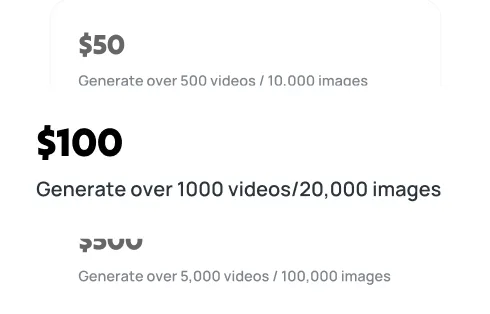
Top up
Your balance can be used across all models on the platform, including claude opus 4.7 thinking, giving you the flexibility to experiment and scale as needed.
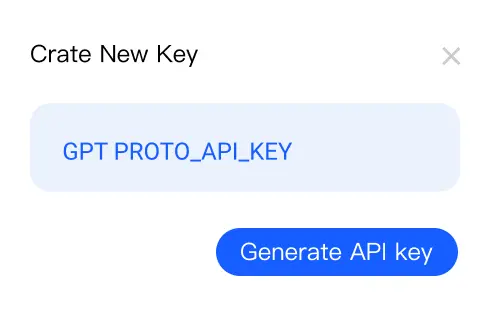
Generate your API key
In your dashboard, create an API key — you'll need it to authenticate when making requests to claude opus 4.7 thinking.
Make your first API call
What Developers Are Saying About Claude Opus 4.7