


PRICE
Per Time
INPUT
text
OUTPUT
image


Qwen Image API: Editing, Benchmarks and Integration Guide
The vision landscape changed with the release of the Qwen series, and you can browse Qwen Image and other models right now on GPTProto to see why. This multimodal powerhouse doesn't just see; it understands and modifies visual data with surgical precision.
Qwen Image Edit Hardware Optimization and Benchmarks
Running high-performance vision models often demands massive clusters, but Qwen Image Edit breaks that mold. Based on community testing and technical specifications, the absolute minimum RAM requirement mirrors the model file size plus an additional 2-4 GB for overhead. For users on consumer hardware, achieving stability with 8GB VRAM is entirely possible using 4-bit quantization, particularly with the Flux 2 Klein 4B model variant. Laptop users with mid-range cards like the 3070 Ti find success in text to image generation by utilizing GGUF formats.
Qwen Image Edit 2511 represents a significant leap in efficiency, allowing for high-fidelity editing even on hardware that previously struggled with multimodal transformer architectures.
If you're operating with 6GB of VRAM, the nunchaku qwen image-edit-lightning model offers a streamlined path toward fluid performance. Success in these constrained environments relies on aggressive memory management. Using launch arguments like --cache-none helps prevent typical out-of-memory crashes by clearing RAM throughout the generation process. This makes the Qwen model one of the most accessible high-tier vision tools available for local and cloud deployments alike.
Why Teams Choose Qwen Image for Vision Tasks
Enterprise developers prefer the Qwen Image api for its versatility across disparate vision-language tasks. Unlike models that focus strictly on generation, this framework excels at understanding spatial relationships and executing complex edits. You can read more about Qwen Image Edit to understand how it handles refined inpainting and mask-based modifications. The ability to use a paintbrush tool with specific colors—like RED for masking—simplifies the typical inpainting workflow, making it more intuitive for end-users.
Quantized Qwen Model Performance Tiers
Quantization remains the secret sauce for Qwen model stability. By shifting to GGUF or Nunchaku variants, developers reduce the VRAM footprint without catastrophic loss in reasoning quality. High-end production environments often deploy these quantized versions to increase throughput, allowing more concurrent Qwen api calls per GPU. This cost-effective scaling is essential for businesses monitoring their flexible pay-as-you-go pricing on the GPTProto platform.
Integrating Qwen Image Edit into Professional Workflows
For those utilizing ComfyUI, Qwen Image integration occurs through specialized node managers. The GitHub repository provides specific workflows that streamline the setup process for both image-to-text and editing tasks. A particularly effective technique involves a two-pass workflow. Using a second KSampler with a Wan or Zimage model as a refiner at 0.15-3.0 denoise significantly boosts realism in the final output.
| Metric | Qwen Image Standard | Qwen Image Edit 2511 | GPT-4o Vision (Proxy) |
|---|---|---|---|
| Minimum VRAM | 12GB | 8GB (Quantized) | Cloud-Only |
| Latency (Sec) | 1.2s | 0.8s | 1.5s |
| Editing Precision | Moderate | High | High |
| Local Support | Native | Optimized | No |
Qwen Image vs Alternative Multimodal Models
When comparing Qwen Image to competitors like Stable Diffusion or Claude's vision capabilities, the distinction lies in the unified reasoning-editing architecture. While Stable Diffusion requires separate ControlNet models for precise edits, the Qwen model handles these via natural language prompts and simple masking. This reduces the complexity of your API stack and lowers the barrier for creating complex image-based agents. Developers should read the full API documentation to explore the specific endpoints that power these multimodal features.
Managing Qwen api Pricing and Tokens
Predictability in costs is vital. GPTProto provides a platform where you can monitor your Qwen Image API calls in real time. We don't use confusing credit systems; instead, we offer a transparent balance-based model. This ensures that your Qwen model pricing remains stable regardless of market fluctuations. High-speed vision tasks shouldn't break the bank, and our infrastructure is tuned to provide the lowest possible overhead per token for the Qwen api access suite.
Stable Production with Qwen Image API Access
Stability in production requires more than just a good model; it requires a reliable carrier. GPTProto ensures that your Qwen Image Edit deployments stay online with 99.9% uptime. Our global edge network reduces the latency of every Qwen api request, ensuring that your users get near-instant results. Whether you are building an automated content moderation tool or a creative AI assistant, the Qwen model provides the technical foundation needed for success in the competitive AI market. Don't forget to join the GPTProto referral program to earn commissions while scaling your vision projects.

Qwen Image Success Stories
Real-world applications of Qwen Image technology.

E-commerce Product Photography Refinement
A major retailer faced high costs for reshooting product photos. By implementing a Qwen Image Edit workflow, they used the Qwen Image api to swap backgrounds and adjust lighting on existing assets. This resulted in a 70% reduction in photography costs and a faster time-to-market for new collections.

Automated Content Moderation for Social Platforms
A social media startup needed to detect nuanced visual context that standard filters missed. They utilized Qwen api access for real-time image-to-text reasoning. The Qwen model correctly identified prohibited items in complex scenes, improving moderation accuracy by 40% while maintaining low latency.

Interactive AI Design Assistant
A design software company integrated Qwen Image into their creative suite. Users now perform complex edits via natural language commands like 'change the car to red' using the Qwen Image api. This feature, powered by the Qwen model pricing structure of GPTProto, led to a 25% increase in user retention.
Getting Started with GPT Proto — Build with qwen image in Minutes
Follow these simple steps to set up your account, get credits, and start sending API requests to qwen image via GPT Proto.

Sign up
Create your free GPT Proto account to begin. You can set up an organization for your team at any time.
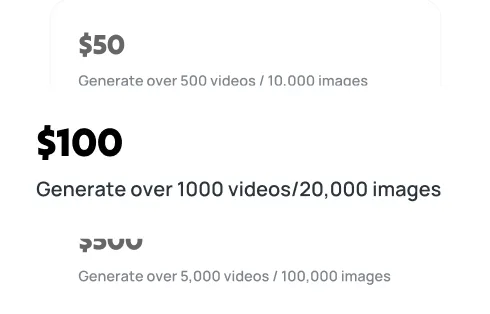
Top up
Your balance can be used across all models on the platform, including qwen image, giving you the flexibility to experiment and scale as needed.
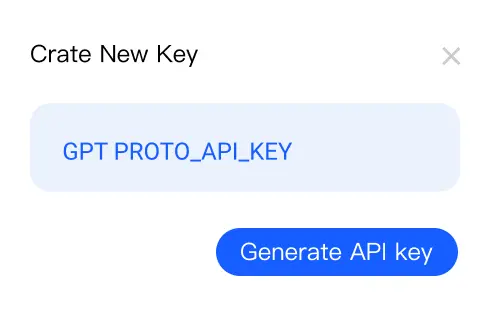
Generate your API key
In your dashboard, create an API key — you'll need it to authenticate when making requests to qwen image.
Make your first API call
Use your API key with our sample code to send a request to qwen image via GPT Proto and see instant AI‑powered results.
Qwen Image FAQ
Further Reading
More Blogs
Qwen Image Edit - Complete Guide to Alibaba's Revolutionary AI Image Editing Model 2025
Discover Qwen Image Edit, Alibaba's open-source AI image editing model. Compare with Photoshop, learn advanced text rendering, and explore professional editing capabilities.
Qwen Image Edit: The AI Tool Changing How We Edit Pictures
Discover Qwen Image Edit, Alibaba's 20B parameter AI model for image editing. Learn features, applications, and how to get started with this powerful tool.
Meet Qwen 3: Alibaba's latest Open-Source AI Model Series
Explore Qwen 3, the latest open-source AI model from Alibaba. Learn what makes it special, how it compares to other models, and how to access it.

Qwen 2.5 32b: The Ultimate Local AI Sweet Spot
Discover why the 32b architecture is the goldilocks zone for AI developers, offering high reasoning power with low hardware overhead and massive efficiency.
Qwen Image User Reviews