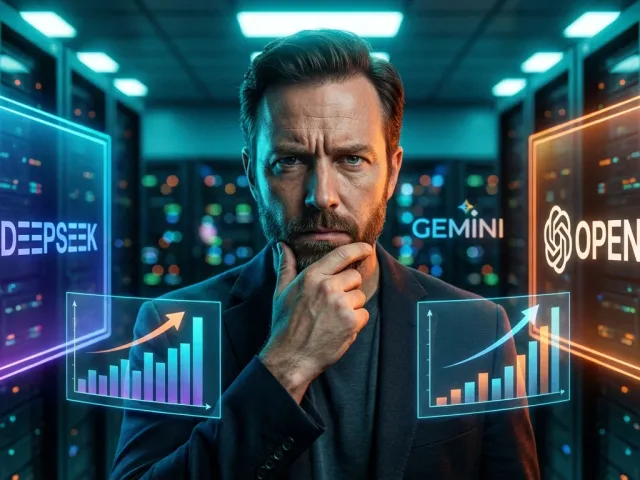
The dream of open-source AI catching up to proprietary tech giants has encountered a significant reality check. A detailed analysis of the newly released DeepSeek V3.2 technical report reveals a sobering truth: despite massive efficiency gains, the performance gap between open models and closed-source heavyweights is widening, not shrinking. This article dissects the architectural hurdles, the prohibitive costs of reinforcement learning, and the reasoning deficits currently holding the open-source community back. We explore why DeepSeek V3.2 remains a crucial tool for developers and how the landscape of artificial intelligence is shifting from a sprint to a resource-heavy marathon.
The Great AI Divide: Why DeepSeek V3.2 is a Wake-up Call
In the rapidly evolving world of artificial intelligence, narratives often shift as quickly as the technology itself. For much of the past year, the prevailing sentiment was one of optimism for the open-source community. We witnessed a parade of powerful models emerging from labs worldwide, fostering a belief that the democratization of high-level intelligence was inevitable and imminent. The "moats" surrounding Silicon Valley's proprietary giants seemed to be drying up. However, the release of the DeepSeek V3.2 technical report has served as a cold splash of reality, challenging the assumption that open source is nipping at the heels of closed models.
The team behind DeepSeek V3.2 has delivered more than just code; they have published a manifesto on the current state of AI scaling. The report is a rare moment of radical transparency, admitting that while DeepSeek V3.2 is a marvel of engineering, the distance between the best open models and the proprietary frontier is increasing. This contradicts the popular "eight-month lag" theory, which suggested open models were consistently just a few steps behind. Instead, the data indicates that closed-source giants are accelerating into a new tier of reasoning capabilities that DeepSeek V3.2 and its peers are struggling to replicate with current resources.
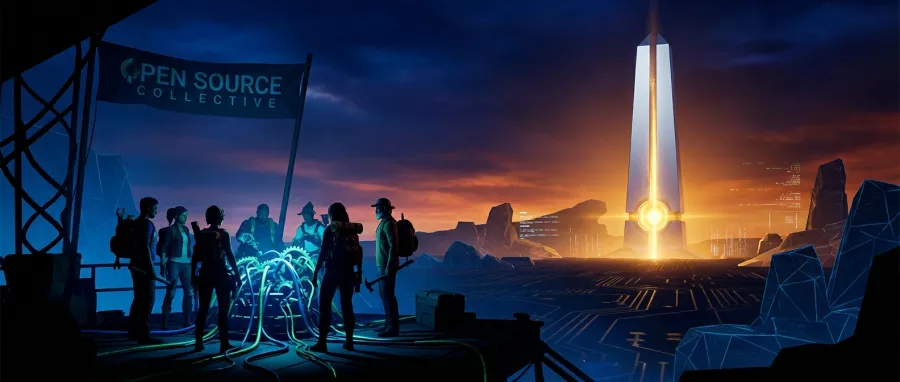
This divergence is critical for developers, CTOs, and tech strategists to understand. The DeepSeek V3.2 report highlights that the battle is no longer just about parameter counts or pre-training data; it is about the structural foundations of intelligence and the astronomical costs of post-training reinforcement. As we unpack the findings of the DeepSeek V3.2 analysis, it becomes clear that while the open-source community is running an impressive marathon, proprietary labs have boarded supersonic jets. For businesses navigating this divide, platforms like GPT Proto become essential survival tools, allowing users to leverage the cost-efficiency of DeepSeek V3.2 alongside the raw power of closed models in a unified workflow.
Analyzing the Benchmarks: DeepSeek V3.2 vs. The Giants
To truly grasp the magnitude of the gap, we must look beyond basic metrics. Standard benchmarks like MMLU have become saturated; modern models are simply too good for them. Consequently, DeepSeek V3.2 was subjected to far more rigorous testing standards, including MMLU-Pro and the notoriously difficult Human Last Exam (HLE). The HLE is designed to break models, posing reasoning questions so complex that they require genuine multi-step problem-solving abilities. In this unforgiving arena, the performance delta between DeepSeek V3.2 and its proprietary rivals becomes undeniable.
Let's examine the numbers. On the MMLU-Pro benchmark, which tests multi-disciplinary knowledge with a high difficulty ceiling, DeepSeek V3.2 scored a respectable 85.0. In isolation, this is a triumph. However, when placed next to GPT-5 (scoring 87.5) and Gemini 3.0 Pro (surging to 90.1), the context shifts. A five-point difference at this elite level represents a massive leap in reliability. It is the difference between a model that "might" know the answer and one that "almost certainly" does. DeepSeek V3.2 proves it is a powerhouse, but it is chasing a target that is moving faster than anticipated.
The chasm widens further in the GPQA Diamond benchmark, which evaluates graduate-level scientific reasoning. This test requires connecting dots across physics, biology, and chemistry. DeepSeek V3.2 achieved a score of 82.4, a strong showing for an open model. Yet, Gemini 3.0 Pro climbed to a staggering 91.9. This near-10-point gap suggests that for high-stakes R&D, engineering simulations, or complex scientific analysis, proprietary models are currently in a different league. DeepSeek V3.2 performs admirably, but for mission-critical reasoning, the closed models maintain a stranglehold.
Benchmark Comparison Table
The following data points illustrate the current standing of DeepSeek V3.2 against top-tier proprietary systems:
| Benchmark Task | DeepSeek V3.2 (Open) | GPT-5 (Proprietary) | Gemini 3.0 Pro (Proprietary) |
|---|---|---|---|
| MMLU-Pro (Knowledge) | 85.0 | 87.5 | 90.1 |
| GPQA Diamond (Science) | 82.4 | 85.7 | 91.9 |
| HLE (Text Reasoning) | 25.1 | 26.3 | 37.7 |
The HLE score is perhaps the most telling. With DeepSeek V3.2 scoring 25.1 compared to Gemini's 37.7, we see that "deep reasoning"—the ability to think through a novel problem without a roadmap—is where the proprietary investment in reinforcement learning is paying the highest dividends.
The Three Structural Traps Holding Back Open Source
Why is DeepSeek V3.2, despite its brilliance, still trailing? The technical report identifies three structural "traps" that create a bottleneck for open-source AI. The first is the "Architectural Rut." Many predecessors to DeepSeek V3.2 relied on standard "vanilla attention" mechanisms. While effective for shorter contexts, this architecture struggles computationally as data sequences grow. It is akin to trying to read a library by looking at every book simultaneously; eventually, the cognitive load becomes paralyzing. DeepSeek V3.2 addresses this, but the legacy of inefficient architecture still plagues much of the open ecosystem.
The second trap is the "Post-Training Financial Wall." The industry often fixates on the cost of pre-training—the millions of dollars in GPU time required to teach a model language. However, the DeepSeek V3.2 report reveals that the true differentiator is the post-training phase. This is where models learn to reason, follow instructions, and use tools. The DeepSeek V3.2 team allocated over 10% of their total compute budget solely to reinforcement learning (RL). In contrast, most open-source projects can only afford to spend roughly 1%. DeepSeek V3.2 is an outlier because its creators possessed the capital to refine the model's "brain," not just expand its memory.
The third pillar is the "Agentic Gap." Modern AI users demand more than a chatbot; they want agents that can execute complex workflows—coding, browsing, and debugging autonomously. This requires a level of "common sense" and error correction that is incredibly difficult to synthesize. While DeepSeek V3.2 has made strides here, the report admits that open models still struggle to "act" with the fluidity of closed systems. The proprietary models, backed by massive proprietary datasets of human interaction, currently hold the high ground in agentic reliability. This reality forces developers to adopt hybrid strategies, using DeepSeek V3.2 for bulk tasks and reserving closed models for complex agentic loops.
DeepSeek V3.2 and the Sparse Attention Revolution
Despite these systemic challenges, the DeepSeek V3.2 team did not resign themselves to second place. They innovated. The most significant breakthrough detailed in the report is the DeepSeek Sparse Attention (DSA) mechanism. To understand why DSA is a game-changer for DeepSeek V3.2, imagine a librarian in a vast archive. A traditional model attempts to scan every book for every query—a slow and inefficient process. DeepSeek V3.2, however, utilizes a "Lightning Indexer."
The Lightning Indexer within DeepSeek V3.2 acts as a hyper-efficient filter, identifying only the relevant data clusters before the model commits compute resources. By selecting the "top-k" most important tokens (approximately 2048 key points in the DeepSeek V3.2 architecture), the system reduces computational complexity from an exponential nightmare to a linear breeze. This allows DeepSeek V3.2 to manage a massive context window of 128,000 tokens—equivalent to a detailed novel—without the latency penalties that typically cripple large language models.

This architectural shift makes DeepSeek V3.2 uniquely positioned for production environments. One of the primary barriers to adopting open-source LLMs has been the "latency tax." If a model takes too long to infer, it is unusable for real-time applications. DeepSeek V3.2 slashes this tax, offering snappy, responsive performance even when analyzing heavy background data. It proves that while open source may trail in raw knowledge benchmarks, DeepSeek V3.2 can lead the pack in architectural efficiency.
Key Benefits of DeepSeek V3.2's Architecture:
- Algorithmic Efficiency: DSA shifts complexity from O(L²) to O(L×k), unlocking long-context processing.
- Rapid Inference: The Lightning Indexer ensures DeepSeek V3.2 responds faster than denser peers.
- Resource Scalability: Running 128K context windows becomes viable on smaller GPU clusters.
- Operational Cost: Lower compute intensity translates to significantly reduced API costs for DeepSeek V3.2 users.
Reinforcement Learning: The Secret Sauce of DeepSeek V3.2
Perhaps the most illuminating section of the technical report covers Reinforcement Learning (RL). Historically, the open-source community relied heavily on Supervised Fine-Tuning (SFT)—showing the model examples and asking it to mimic them. DeepSeek V3.2 pivots away from this, leaning into aggressive RL where the model "practices" problems and receives feedback. It is the pedagogical difference between reading a textbook on calculus and actually solving thousands of calculus problems.
The DeepSeek V3.2 researchers constructed specific "Expert Models" across six distinct domains, including mathematics, coding, and logic. These experts generated high-quality synthetic data used to train the primary DeepSeek V3.2 model. This implies that DeepSeek V3.2 isn't just learning from human text; it is learning from optimized, synthetic reasoning paths. This approach allowed DeepSeek V3.2 to significantly narrow the gap in coding tasks, where it now rivals some of the most advanced proprietary systems.
To implement this, DeepSeek V3.2 utilized the Group Relative Policy Optimization (GRPO) algorithm. GRPO allows the model to generate multiple potential solutions to a prompt, compare them, and optimize for the most logical path. This is why DeepSeek V3.2 feels "smarter" in conversation; it is not merely predicting the next word, but following a reinforced logic chain. However, this level of training is incredibly capital-intensive. It highlights why DeepSeek V3.2 is an exception rather than the norm in open source—few other teams can afford the compute required for this depth of reinforcement.
The Agentic Frontier: Where DeepSeek V3.2 Struggles
If the report is critical of any area, it is the "Agentic" capabilities of current models. We are transitioning from the era of Chatbots to the era of Agents—AI that uses computers to perform tasks. DeepSeek V3.2 shows promise here but also reveals the limitations of synthetic data. To improve agentic performance, the team synthesized over 85,000 complex prompts across 1,800 digital environments, effectively building a "gym" for DeepSeek V3.2 to practice software navigation.
In the MCP-Universe benchmark, which tests the ability to navigate diverse software APIs, DeepSeek V3.2 reached an 80.3% success rate. For many administrative tasks, this makes DeepSeek V3.2 a viable autonomous assistant. However, Gemini 3.0 Pro sits at 87.9%. That nearly 8% gap represents the "clumsiness factor." In a production environment, that difference is the gap between an assistant that works autonomously and one that requires constant supervision. The proprietary models appear to possess a stronger grasp of edge cases—those unexpected scenarios that DeepSeek V3.2's synthetic training data may have missed.
Strategic Implications: Sovereignty and Transparency
While the "widening gap" headline may dishearten open-source purists, DeepSeek V3.2 provides a crucial roadmap. It demonstrates that "brute force" data scaling is no longer sufficient. To compete, open source must adopt smarter architectures like DSA and aggressive RL strategies. Furthermore, DeepSeek V3.2 validates the necessity of open models for transparency. With proprietary systems, users interact with a "black box," unaware of potential biases or safety filters. DeepSeek V3.2 allows for inspection and modification, a vital feature for regulated industries.
There is also the issue of data sovereignty. Relying exclusively on a few tech giants for intelligence infrastructure poses a strategic risk. DeepSeek V3.2 offers independence. Even if it is marginally less capable than the absolute frontier, DeepSeek V3.2 provides a level of control and privacy that closed models cannot match. It represents intelligence as a public utility rather than solely a corporate product. For developers, the winning strategy involves using the right tool for the job. DeepSeek V3.2 is the ideal "workhorse" for 80% of tasks, offering extreme cost efficiency, while proprietary models can be reserved for the final 20% of complex reasoning.
Conclusion: The Legacy of DeepSeek V3.2
The DeepSeek V3.2 technical report is more than a collection of benchmarks; it is a defining moment for the AI industry. It signals that the "easy" gains are behind us and that future progress will require unprecedented engineering ingenuity and investment. DeepSeek V3.2 stands as a formidable achievement, pushing the boundaries of what is possible outside of the largest proprietary labs. It proves that open source is not synonymous with "second-rate," even if the absolute peak of reasoning remains momentarily out of reach.
As we move forward, flexibility will be paramount. Whether you are a solo developer or an enterprise CTO, the ability to toggle between models is essential. DeepSeek V3.2 offers a high-performance, cost-effective alternative to the status quo, but the gap in high-end reasoning persists. By utilizing platforms that unify these models, we can stop focusing on the "gap" and start focusing on the value we create. DeepSeek V3.2 has set a new standard for technical excellence, ensuring that while the race is getting harder, the open-source community is still very much in the running.
Original Article by GPT Proto
"We focus on discussing real problems with tech entrepreneurs, enabling some to enter the GenAI era first."