AI Packaging Design Generator
Create packaging concepts and product mockups from a text prompt, an uploaded image, or both. Explore new looks for boxes, bottles, pouches, labels, and ecommerce visuals without starting every idea from a blank canvas.
Turn a text prompt into photorealistic images, advertising posters, character art, and editorial layouts — powered by xAI's Grok image model, with legible text and logos rendered straight into the frame. Drop in a photo to edit or restyle it, or start from a blank prompt. Set your size, aspect ratio, and format, then generate in seconds. You pay per image from a prepaid balance, with no monthly subscription to sign up for.
The Grok AI image generator is GPTProto's hosted access to grok-imagine-image, the text-to-image model from xAI's Grok, built on the Aurora engine. You type a prompt — or upload a reference image and describe a change — and the model returns a finished image in your chosen size, aspect ratio, and output format. It handles two workflows from the same panel: text-to-image, where a written description becomes a new picture, and reference-based editing, where you upload an image and the model reworks it while keeping the subject recognizable.
Aurora was released by xAI in December 2024 and is the engine behind every still image Grok produces. Unlike diffusion models that start from noise and denoise toward a picture, it generates the image autoregressively — closer to how a language model reads text — which is what gives it strong prompt adherence and unusually clean lettering inside the frame.
On xAI's own apps, Grok image generation moved to paid-only access in 2026: the free tier no longer includes it, and full access runs through subscriptions starting around $30/month. On GPTProto there's no subscription — you pay per image from a prepaid balance. The bound grok-imagine-image model is listed at $0.012 per image (40% off the $0.02 market rate), and the exact cost for each run shows on the Generate button before you commit.
Most image models paint text as texture, so headlines come out as garbled shapes. Aurora generates the image autoregressively, closer to how it reads language, so headline type, taglines, and logo lettering come out readable. That's why the poster examples carry clean "NOISE THEORY" and full ad taglines inside the frame, which is the single hardest thing for most generators to get right. For advertising mockups, magazine covers, and brand art, it often means you can skip the post-production text layer entirely.
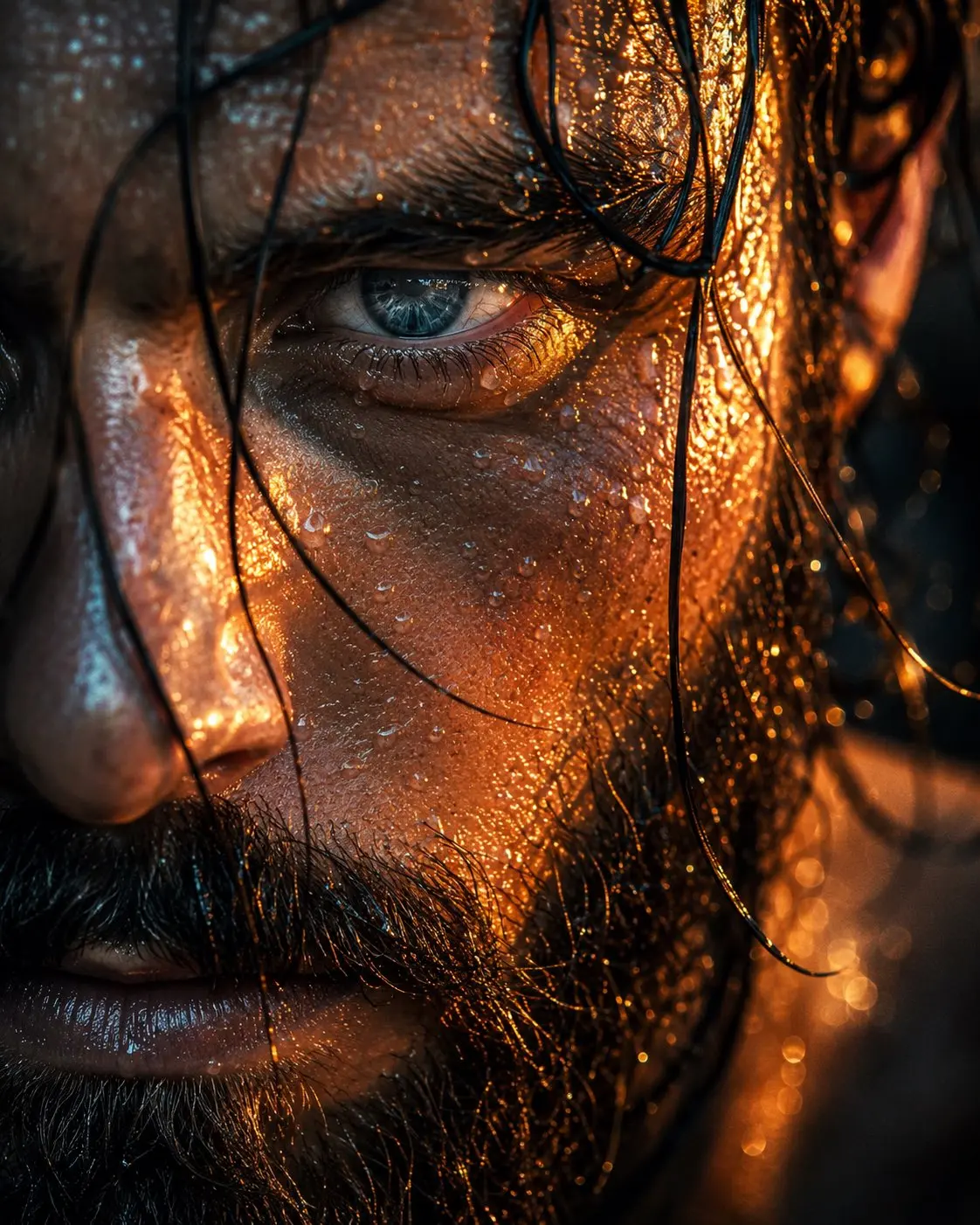
Grok renders human anatomy, skin texture, and complex lighting with enough fidelity for close-up portrait work: sharp iris and hair detail, believable rim light, and high contrast between light and shadow, as in the rugged-portrait example. The same realism carries into product and automotive shots, where reflections, materials, and surface detail hold up at larger sizes.
You shape the result with three settings alongside the prompt: Size (up to 1K), Aspect ratio (square, portrait, landscape, and wide formats), and Output format (JPEG or PNG). Because the model has no fixed seed, the same prompt varies between runs — so generating two or three outputs and picking the best is faster than re-running one prompt over and over.
A few habits get noticeably more out of the model:
Wondering about xAI Grok API pricing in 2026? This guide breaks down every Grok model's token rates, subscription tiers, free credits, and how it stacks up against GPT and Claude — so you can pick the right plan without overpaying.
The Grok 4.3 benchmark reveals a major leap in emotional inference and logic verification. Explore how the 4-agent architecture improves AI accuracy now.
Explore the Grok 4 API for advanced reasoning, image, and video generation. Optimize your developer workflow and reduce costs. Get started with xAI now.
Grok 4.1 brings high EQ and real-time search to the AI race. Discover if its personality-driven approach beats the competition. Read our full analysis.